Developing A Human Organ-on-Chip Platform to Model the Brain-Heart Axis
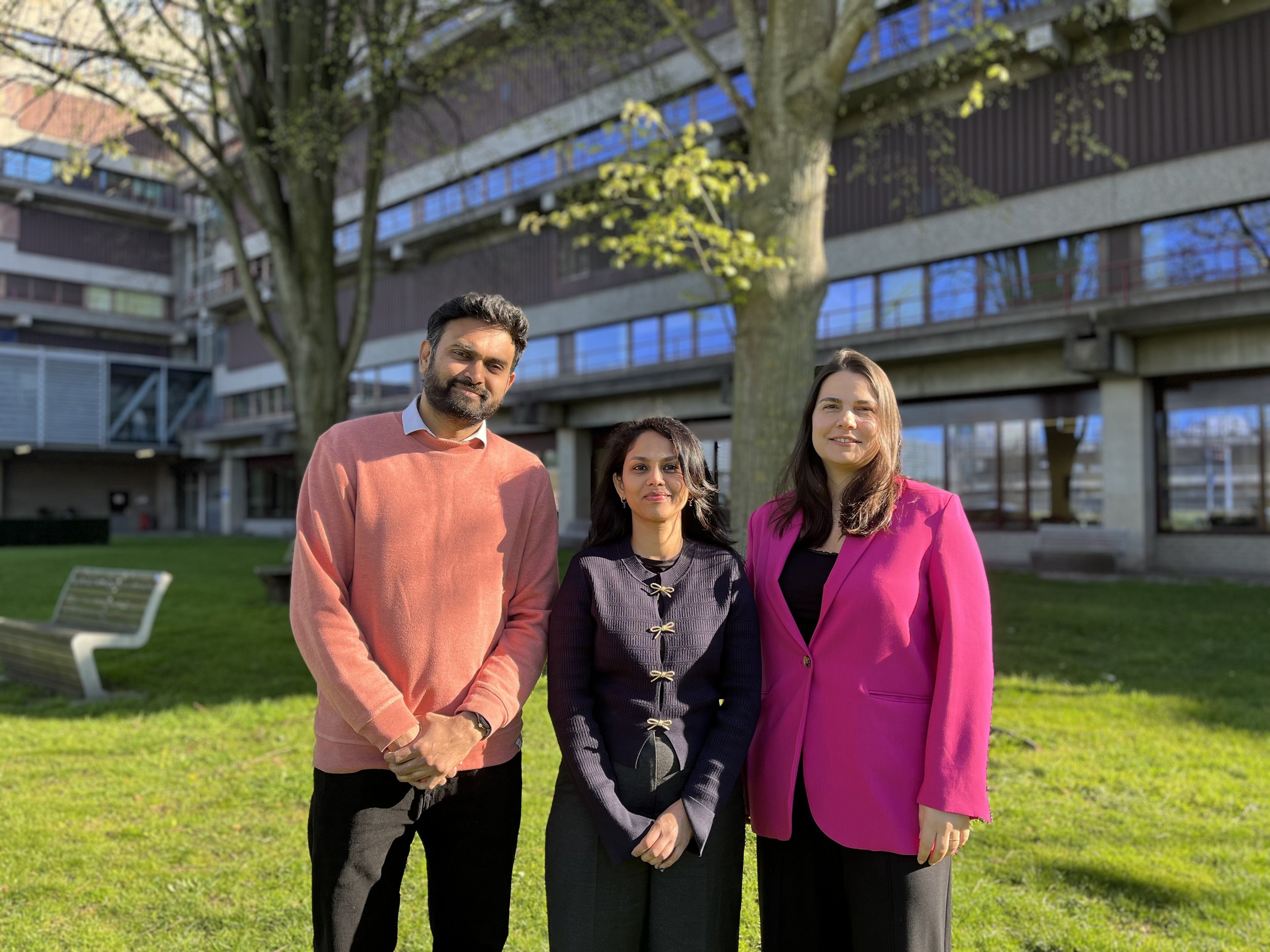
Left to right: Dr. Adithya Sridhar, Dr. Harsha Devalla, Dr. Renata Vieira de Sá
Understanding how the brain and heart communicate is crucial for comprehending complex neurological and cardiac disorders. With the support of the AI&I Cross-Institute Synergy Grant, Dr. Adithya Sridhar and Dr. Renata Vieira de Sá will collaborate with Dr. Harsha Devalla to establish a human Organ-on-Chip (OoC) system that simulates aspects of the Brain-Heart axis, thereby elevating our understanding of neurocardiac interactions.
The heart and the brain are in constant synergy. The bidirectional communication between these two vital organs is essential for – fine-tuning key physiological processes such as heart rate and blood pressure. Referred to as the Brain-Heart axis, it involves complex interactions between central neural networks, peripheral autonomic pathways, and an intracardiac network of neurons. Disruption of this system has been implicated in a wide spectrum of brain and heart diseases. There is evidence of cardiac dysfunction in neurological diseases such as epilepsy and cardiac disorders such as heart failure impact brain health. Despite these associations, the precise pathways orchestrating this complex interaction remain largely unexplored due to the lack of suitable models to understand the underlying biology.
A Novel Human-based Model
To address this gap, OrganoVIR Labs will be partnering with Dr. Harsha Devalla (Department of Medical Biology, Amsterdam Cardiovascular Sciences) to establish a human Organ-on-Chip (OoC) system that simulates aspects of the Brain-Heart axis. Co-led by Dr. Adithya Sridhar (Assistant Professor at OrganoVIR Labs) and Dr. Renata Vieira de Sá (Senior Scientist) at OrganoVIR Labs), this initiative will recapitulate the efferent communication (top-down) comprising the brain, the peripheral nervous system, and the heart. Built with brain organoids, cardiac sympathetic neurons, and cardiomyocytes, this model will be used to study the cardiac complications of HSV-1 infection in the brain.
Towards Better Understanding and Treatment
By enabling researchers to study the interplay between the brain and the heart in a modular system, this platform will transform our understanding of neurocardiac interactions – opening new avenues for investigating how viral infections and neurological disorders can lead to cardiac complications.
Ultimately, this collaboration represents a significant step towards developing more relevant human-based models that can accelerate the discovery of therapies while reducing reliance on animal models.