OrganoVIR Labs at WORD+2026: Advancing Organoid-Based Virus Research
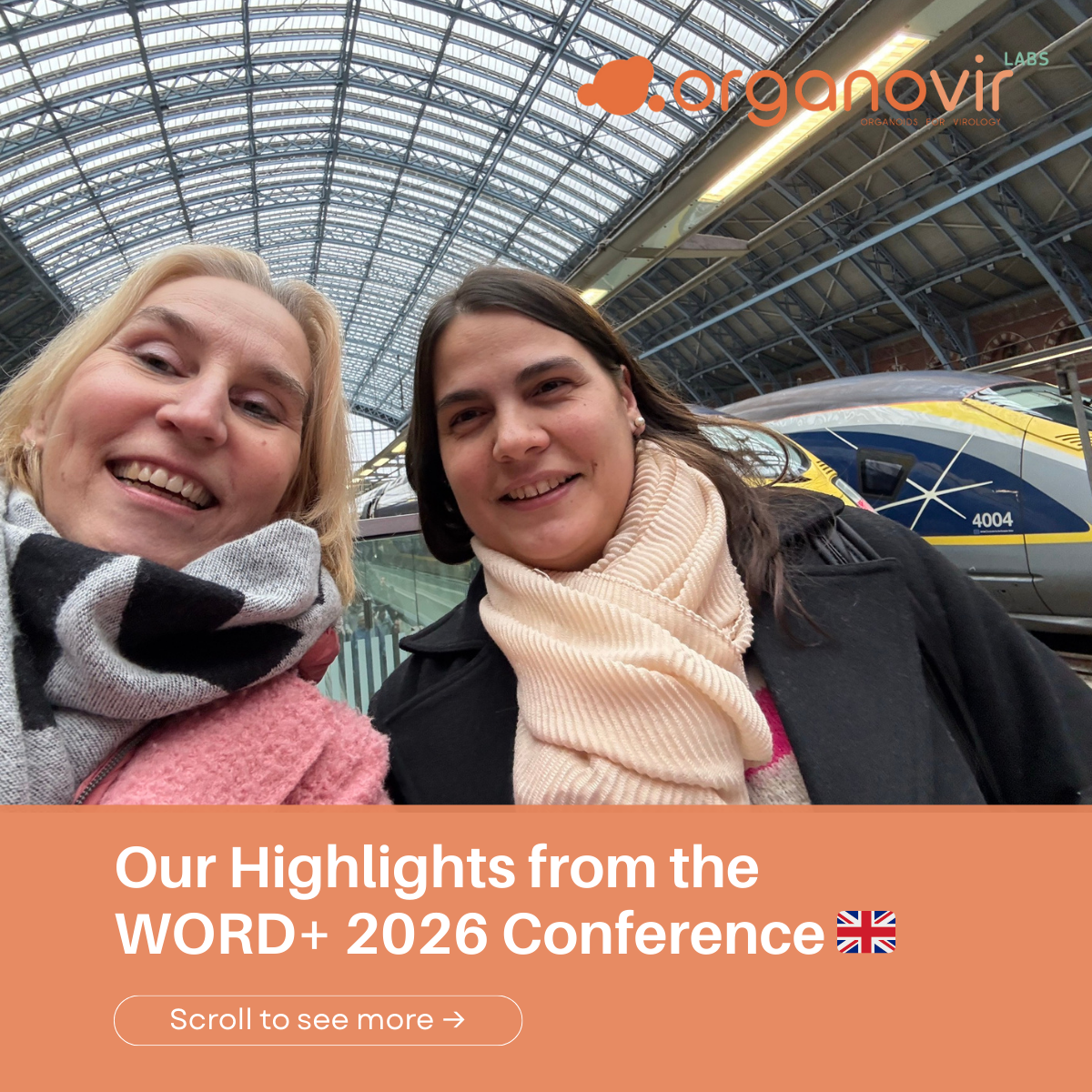
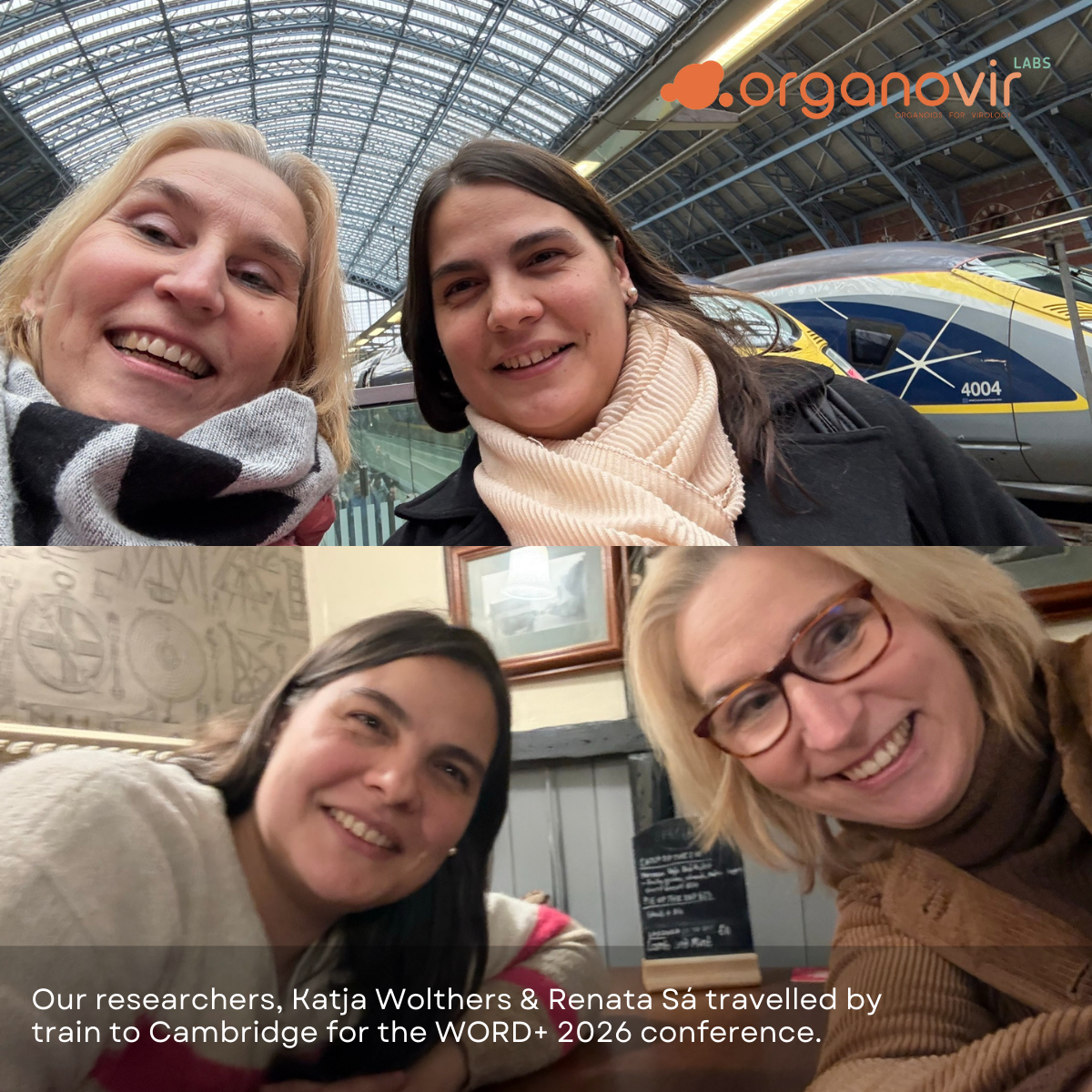
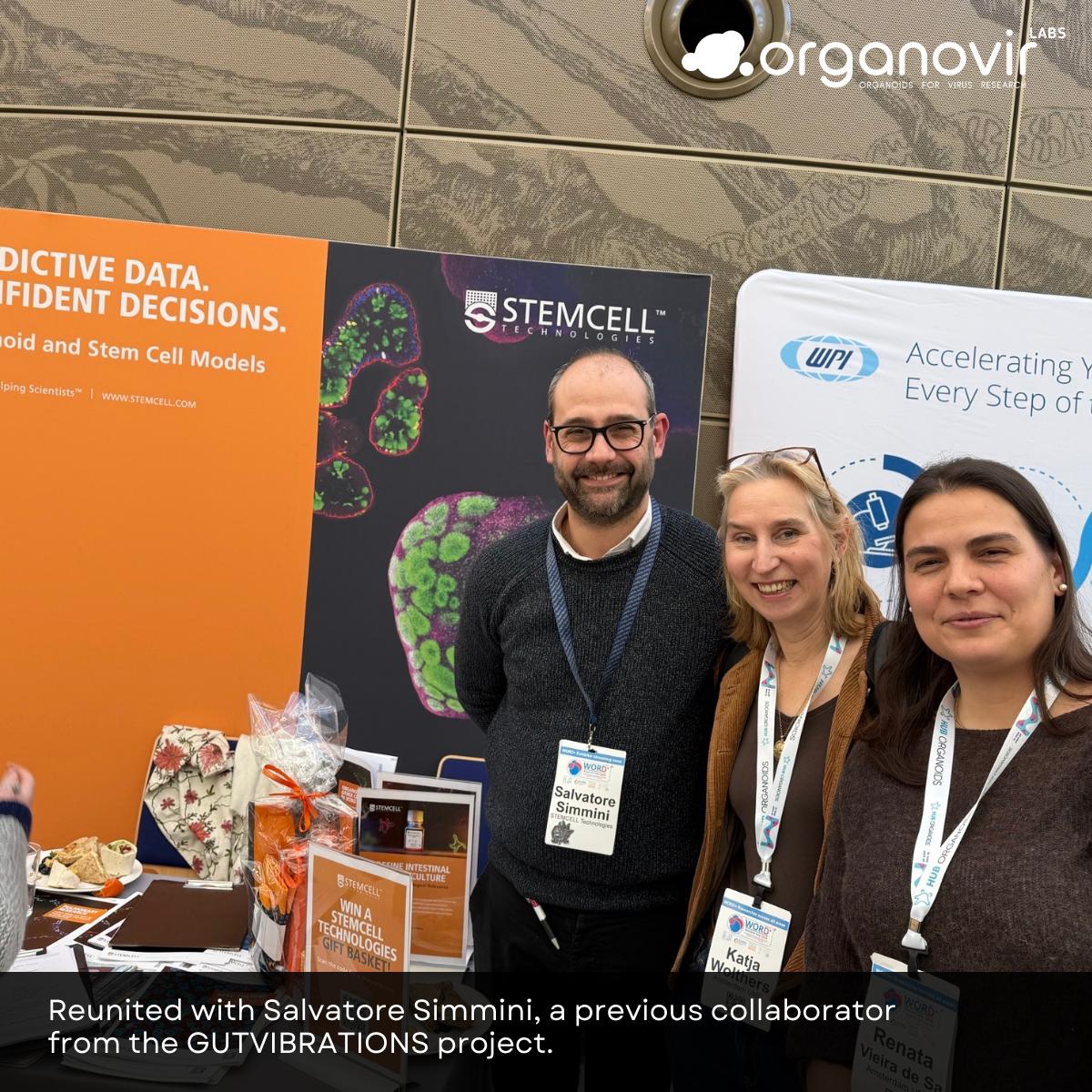
On Feburary 4th and 5th, 2026, researchers from OrganoVIR Labs attended the WORD+ 2026 conference at Hinxton Hall in Cambridge, UK. Representing OrganoVIR Labs were Katja Wolthers, co-head of OrganoVIR Labs, and Renata Sá, postdoc researcher. Together, they joined leading scientists and industry experts in exploring the latest innovation in organoid and organ-on-chip (OoC) technologies.
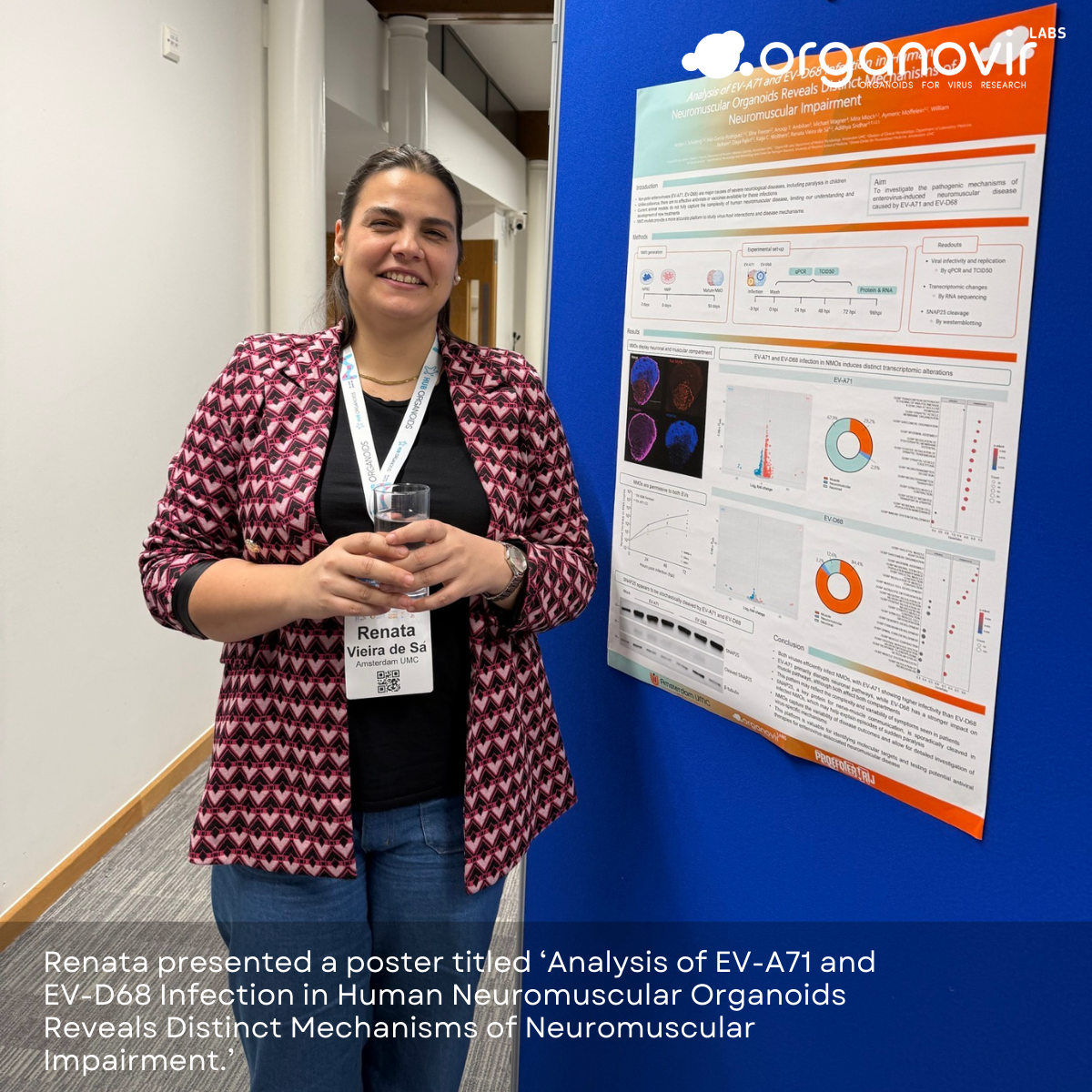
During the conference, Renata presented a scientific poster titled: Analysis of EV-A71 and EV-D68 Infection in Human Neuromuscular Organoids Reveals Distinct Mechanisms of Neuromuscular Impairment. This work highlights how human neuromuscular organoids can be used to study virus-induced pathology with unprecedented precision. By modeling infections caused by Enterovirus A71 (EV-A71) and Enterovirus D68 (EV-D68), the research provides new insights into the mechanisms underlying neuromuscular dysfunction, offering promising directions for future therapeutic development.
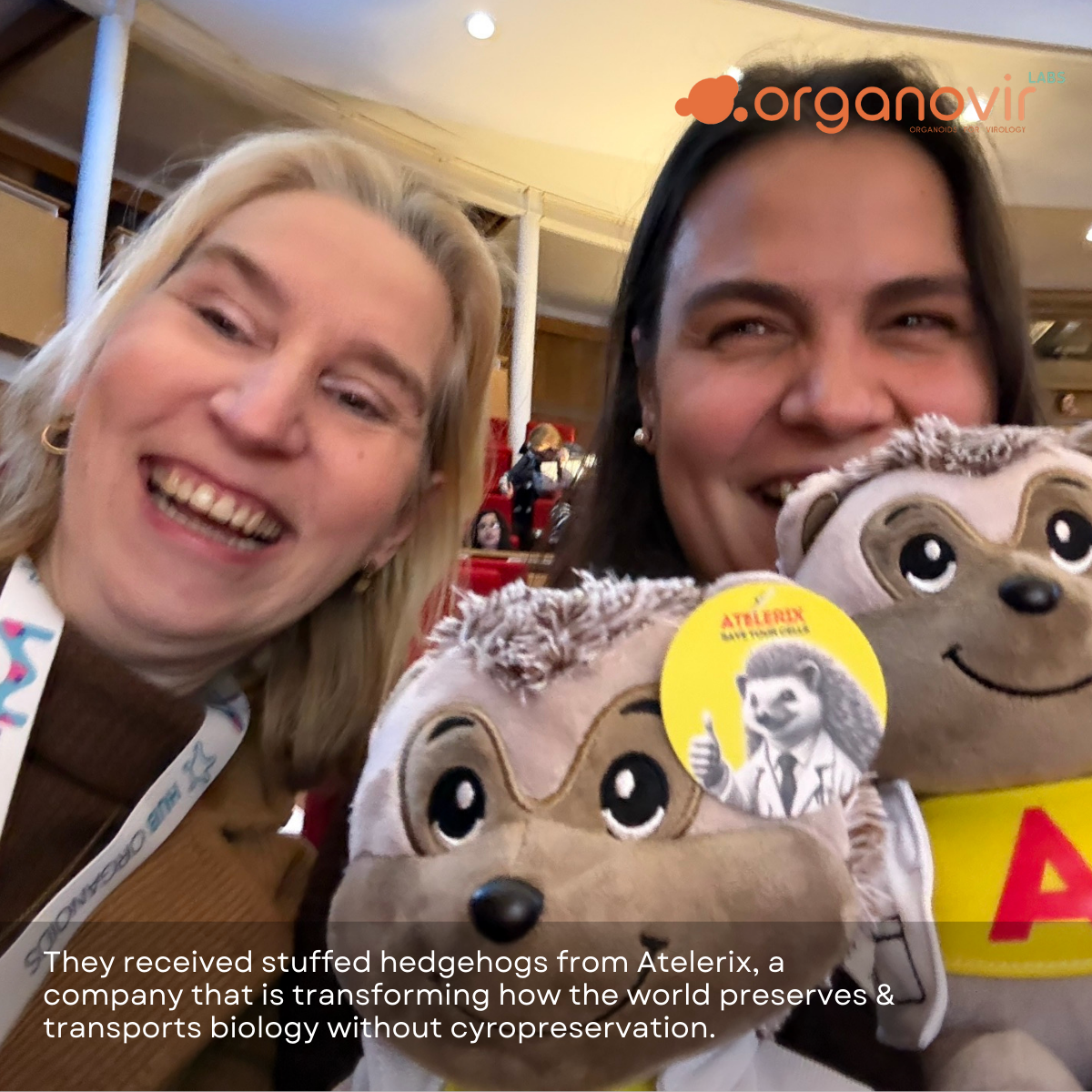
This year’s conference showed exciting advances in the field of organoid technology, including high-throughput screening platforms for drug discovery and testing, automation technologies, novel insights into the role of lipids and adipocytes in disease development, and the emergence of multi-organ models to better capture systemic mechanisms. “I am inspired to see the developments that are accelerating the translation of human-relevant in vitro models into practical applications for biomedical research and pharmaceutical development!” said Katja.
Reflecting on the event, Renata shared: “This was a really exciting conference that brings together the latest developments in new approach methodologies (NAMs) across the field. It was great to see progress not only from academic labs, but also from pharma, and to speak directly with industry sponsors about how they are working to translate NAM technologies into practice”.
At OrganoVIR Labs, we are committed to transforming the virology landscape by establishing human organoids as disease models for virology. By developing physiologically relevant systems, we aim to improve disease modeling, enhance drug discovery, and accelerate the development of effective antiviral therapies. Our participation in WORD+2026 reflects our ongoing dedication to innovation, collaboration, and scientific excellence — we look forward to attending next year!